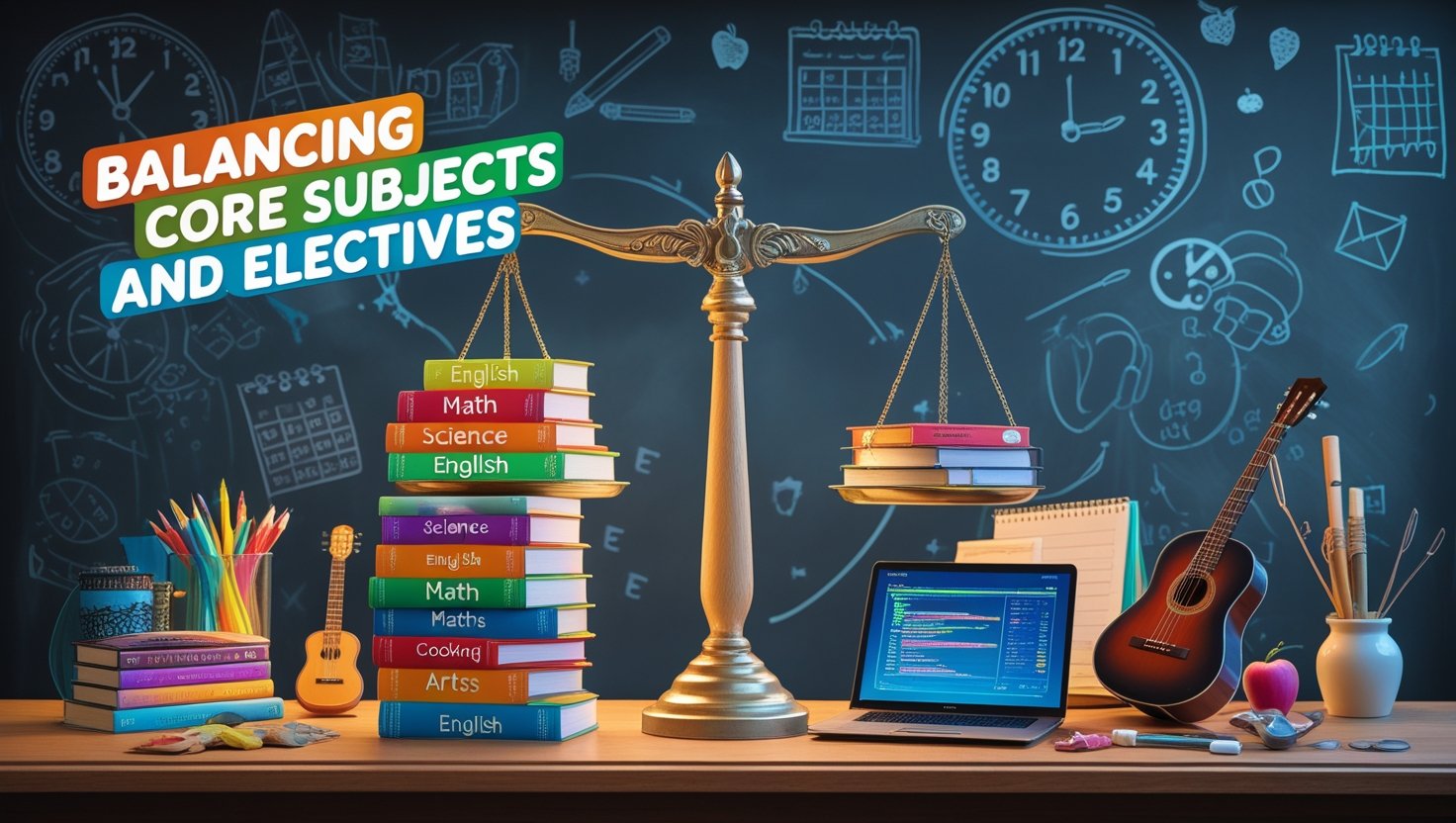
Nowadays, the education system is not only focused on the core subjects, but is that not enough? The balanced curriculum plays a crucial role in the most important subjects, such as math, science, English, etc. are included. When a student is limited to only traditional subjects, their interest and creativity are sometimes suppressed. But when he gets a chance to choose subjects of his choice, such as Art, Music, Drama, or Computer Studies, he starts learning more actively.
The balanced curriculum means that students are not only focused on their academics, but it will also cover their personal development a give them a chance to create a balanced growth. From this, their decision-making, time management, and self-confidence are also made better. Through such a curriculum, students can explore both their skills and interests, which also proves helpful in their future career planning.
This blog will explore the concept of how, by balancing core subjects and electives, such an educational environment can be created that not only brings academic growth to the student but also understands and supports their individuality.
Core Subjects: The Foundation of Learning:
The core subjects make the academic base of any student strong. This is the subject that is essential for every grade student to study, like Mathematics, Science, English, and Social Studies. Their aim is that students should acquire basic knowledge and skills that are useful in every field of life. Math teaches logical thinking and problem solving, Science teaches observation and experimentation.
English develops communication and comprehension while Social Studies helps in understanding the human way and society. These subjects are not just for exams but they also shape the way students think, understand and take decisions. Another advantage of core subjects is that they provide basic knowledge required for higher education and professional careers. If a student has a strong foundation, they can perform well in any future field. Therefore, every student needs to take core subjects seriously and achieve competitiveness in them.
Electives: Exploring Interests and Talents:
Elective subjects allow students to study according to their wishes and interests. These are those subjects which are not compulsory but students select them as per their choice, like Art, Music, Computer Science, Sports, Drama, or Business Studies. The advantage of electives is that they bring out the hidden skills and talents in the students and bring them to the fore.
When students study the subject of their choice, they feel more motivated and engaged. This not only increases their confidence, but they also show improvement in learning. Electives are also helpful for people who want to pursue a career in a specific field, for example, if someone is interested in IT, then he can take Computer Science or Coding elective. These subjects promote creativity and innovation, which are very important in today’s times. Thus, electives give students a balanced and enjoyable learning experience in which they can explore their individuality and passions along with academics.
Striking the Right Balance:
The balance between the core and elective subjects is very important for every student. Often, it is seen that some students focus only on their core subject, and they are so busy with their core subject that they cannot explore their interests. On the other hand, some students focus too much on electives and remain weak in academics. The right combination of both makes a successful and well-rounded student.
To achieve this balance, both the school system and the students have to work with planning and understanding. Every student has different aptitude, so they should choose subjects that are according to their future goals and current interests. The schedule should be such that the timing of core subjects is proper, and electives also get adjusted smoothly in it. This not only reduces academic stress but also increases the fun of learning. When there is balance, the student is saved from boredom and burnout and can give a good performance in every subject. Balance is the path to success.
Roles of Teachers, Schools, and Parents:
The design of a balanced curriculum is not the only role of the student, therefore, the teacher, school, and parent are also important parts of the design of the balanced curriculum. Teachers should understand students’ strengths and interests and guide them accordingly. They should motivate students not just for marks but also for knowledge and personal growth. Schools should design curricula and timetables that promote balance. There should be programmers who include electives with due importance. It is also the school’s responsibility to provide facilities and qualified staff.
Parents should take care of the interests and skills of their children. They should not be pressured to only follow the path of becoming a doctor or engineer, but their natural talents should also be supported. When there is coordination between these teams’ teachers, schools, and parents, a healthy learning environment is created for the student. This environment makes him confident and encourages him to move ahead in every field.
Conclusion:
Today, education is not just limited to bookish knowledge. Now there is a need for a curriculum that not only makes students academically strong but also develops confidence, creativity, and practical thinking in them. Core subjects give students a foundation, while electives give them a chance to explore their individuality. When there is a good balance of both, students break away from boring routines and become part of an exciting and meaningful learning experience. The role of teachers, schools, and parents is also very important in this journey. Their support keeps the student motivated and focused.
Ultimately, a well-rounded curriculum is the only way that gives students not just good grades but also success and satisfaction in life. Every student needs to make their learning journey balanced, thoughtful, and purposeful. With this approach, we can move towards a future where every student can achieve their full potential.
FAQS:
Why is balancing core subjects and electives important in education?
Balancing core subjects and electives helps create a well-rounded education. Core subjects build academic strength and foundational knowledge, while electives encourage creativity, personal interest, and skill development. Together, they support both academic success and personal growth.
What are considered core subjects, and why are they necessary?
Core subjects include Mathematics, Science, English, and Social Studies. These are essential because they teach critical thinking, communication, problem-solving, and understanding of society skills that are useful in higher education and real-life situations.
How do elective subjects benefit students?
Elective subjects like Art, Music, Drama, Computer Science, or Sports allow students to explore their interests and talents. They make learning enjoyable, improve student engagement and confidence, and help students discover potential career paths.
What challenges do students face when there’s no balance in the curriculum?
Without balance, students might either become bored or stressed with only academics or fall behind in academics by focusing too much on electives. Both extremes affect performance and personal growth negatively.
What roles do teachers, schools, and parents play in creating a balanced curriculum?
Teachers guide students based on strengths, schools provide structure and resources for both subject types, and parents support students’ interests without pressuring them into specific careers. Together, they help students achieve a balanced and successful educational journey.
