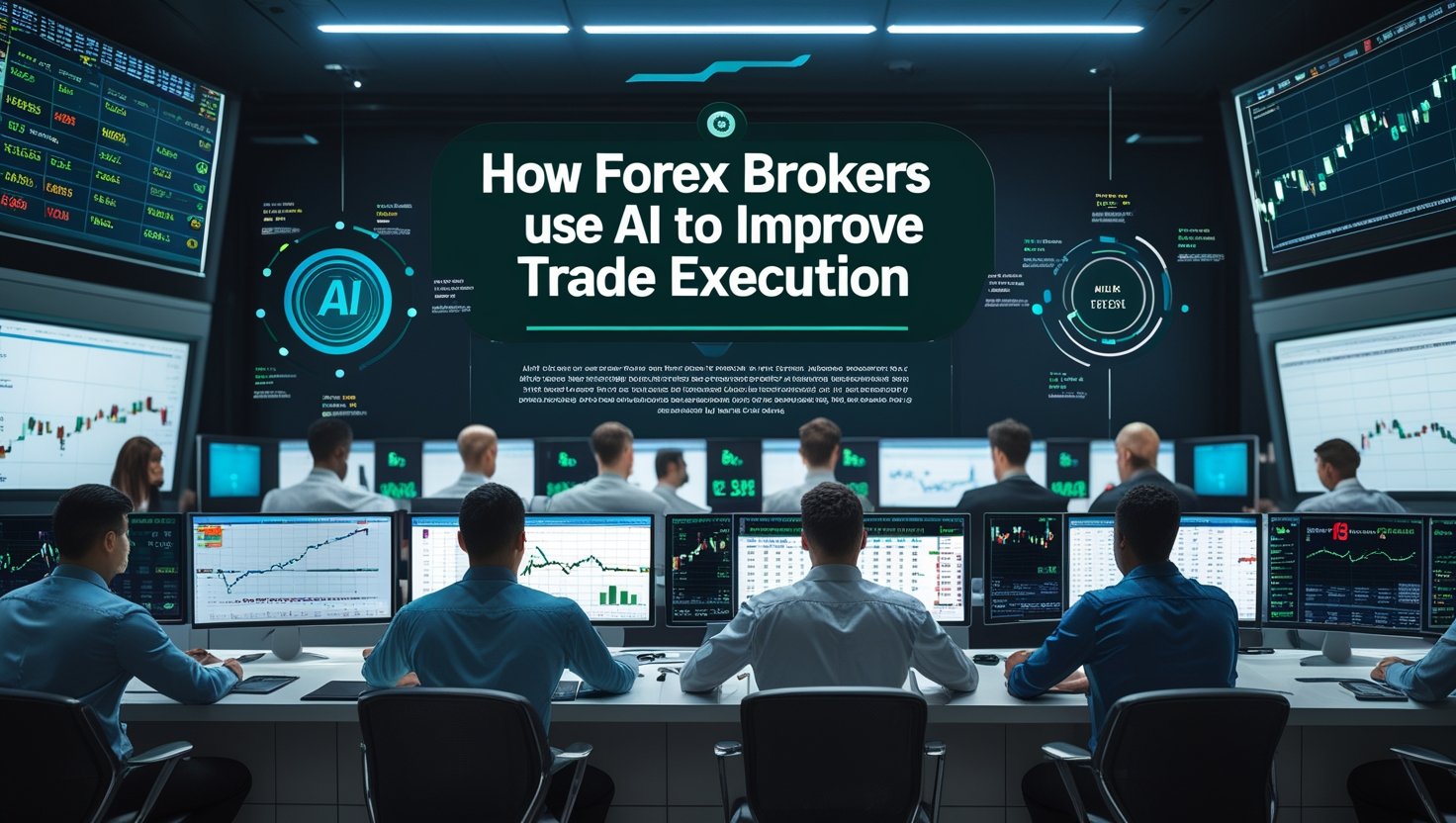
Forex Market is one of those markets where every second has a worth and every minor delay can cause a big loss, that why speed and precision of decision-making is the most essential skill of the forex market, meaning accuracy of decision-making plays a crucial role in Forex trading. When any trader places an order for a lot (sell or buy), it is their responsibility to place their order at every instant, and on the right of it is the analysis of whether, for some reason, the delay comes in executing the trade, which may result in the loss of the trade. That’s why brokers continuously advance their platform for traders for better execution in their trading. Nowadays, the advancement of the AI era plays a vital role in Forex Trading.
AI tools give brokers the ability to process real-time market data to aid in decision making and order execution at lightning speed Use of AI not only makes execution faster but also helps in data analysis and prediction, due to which clients’ trades are executed more accurately and timely With the help of AI, brokers become competitive and their performance becomes reliable for the clients The purpose of this introduction is to explain how AI has transformed the traditional methods of forex trading.
Understanding Trade Execution in the Forex Market:
Trade execution means that when one trader gives an order, the trader sells or buys a lot, so the process of executing of trade in the forex market is a little bit complex because it is not a centralized exchange, but this is a decentralized system where there are multiple liquidity providers.
When someone places an order in the forex market so the broker finds the best prices and fastest execution location But many challenges are faced in this process such as slippage, i.e. when the trade gets executed at a slightly different price from the price at which you want to trade, latency, i.e. delay in sending and receiving the order, and requotes, where the order is not accepted due to price change. All these factors affect the trade execution. Forex brokers are using advanced tools and now Artificial Intelligence to reduce these challenges. AI scans the price data in real-time and identifies the most effective execution points. This not only increases the speed but also improves the execution quality. This section explains the mechanism of trade execution and how AI can improve it.
How AI Algorithms Optimize Order Routing:
Order routing means that when someone places a trade in the broker platform, so broker sends it to any liquidity providers or trading venue for the best price and fastest execution in a traditional system, it is done manually by a person on set rules of the market. Artificial Intelligence has made it smarter. AI algorithms analyse in real-time which liquidity provider has the best rates available at that time and which route can be used to complete the trade the fastest.
AI algorithms process thousands of data points every second, which includes latency, prices, trade volume, and execution history. Based on this analysis, the AI decides where the orders should be routed. This not only makes the execution faster, but also gives you better prices, which improves your overall trading result. AI-based smart order routing has increased the efficiency level of brokers, and they provide a more competitive environment to their clients. This section explains how AI optimizes every aspect of execution through intelligent routing, which also reduces the risk of FOMO and price manipulation.
Real-Time Market Analysis and Decision Making:
The Forex market runs non-stop and generates new price movements and trends every second. That is why real-time analysis and quick decision-making are very important in trading. AI has proven to be a game-changer in this field because it analyzes data very quickly and predicts market trends or patterns. AI algorithms combine sentiment analysis, technical indicators, and historical data to create a real-time picture that helps brokers understand the direction in which the market is moving and when it would be better to execute an order.
AI can analyze the millisecond level, which human or manual systems cannot do. Can do this AI models improve over time and make their analysis more accurate which makes the broker’s decision-making faster and more accurate The benefit of this is that traders’ orders are executed according to the market and at an accurate point which makes their trading experience positive This section explains how AI uses real-time data to make instant and intelligent trading decisions.
Reducing Slippage and Improving Client Satisfaction:
Slippage is a common issue in forex trading, which occurs when you want to execute a trade at a certain price, but that price changes, and your order is filled at a different price. This issue occurs due to latency or market volatility, but AI effectively reduces this problem. AI continuously monitors market data and predicts the pattern of price movement, which lets brokers know when and which price is stable. AI algorithms execute orders at the time when the price is favorable through speed and prediction.
This reduces the chance of slippage. When slippage is less, the confidence of clients naturally increases. Because their trades are completed as per their expectations, which improves their overall satisfaction, Brokers build both client retention and trust by using AI-based trade execution platforms, making traders feel that their broker is efficient and working in their best interest. This section explains how AI minimizes slippage and thereby increases client loyalty and satisfaction.
Conclusion:
Today, Artificial Intelligence is not just a tool in forex trading but has become a necessity. Brokers who use AI have made a difference in fast execution, smart order routing, and real-time decision making, which has improved their performance overall, but this is just the beginning. In the coming time, AI will become more advanced, and self-learning algorithms will make trade execution more precise.
AI will not only help in filling orders, but it will also help in detecting market manipulation and warning traders about risks. AI gives brokers a competitive advantage, and traders get a more transparent and effective trading environment. In the future, AI platforms will help in preventing human error. It will reduce the cost to a minimum, and automated systems will make trading more secure and faster. The conclusion is that the role of AI is no longer just that of a support system; it has become an integral part of the forex ecosystem, and brokers who adopt this technology are in the best position to move ahead.
