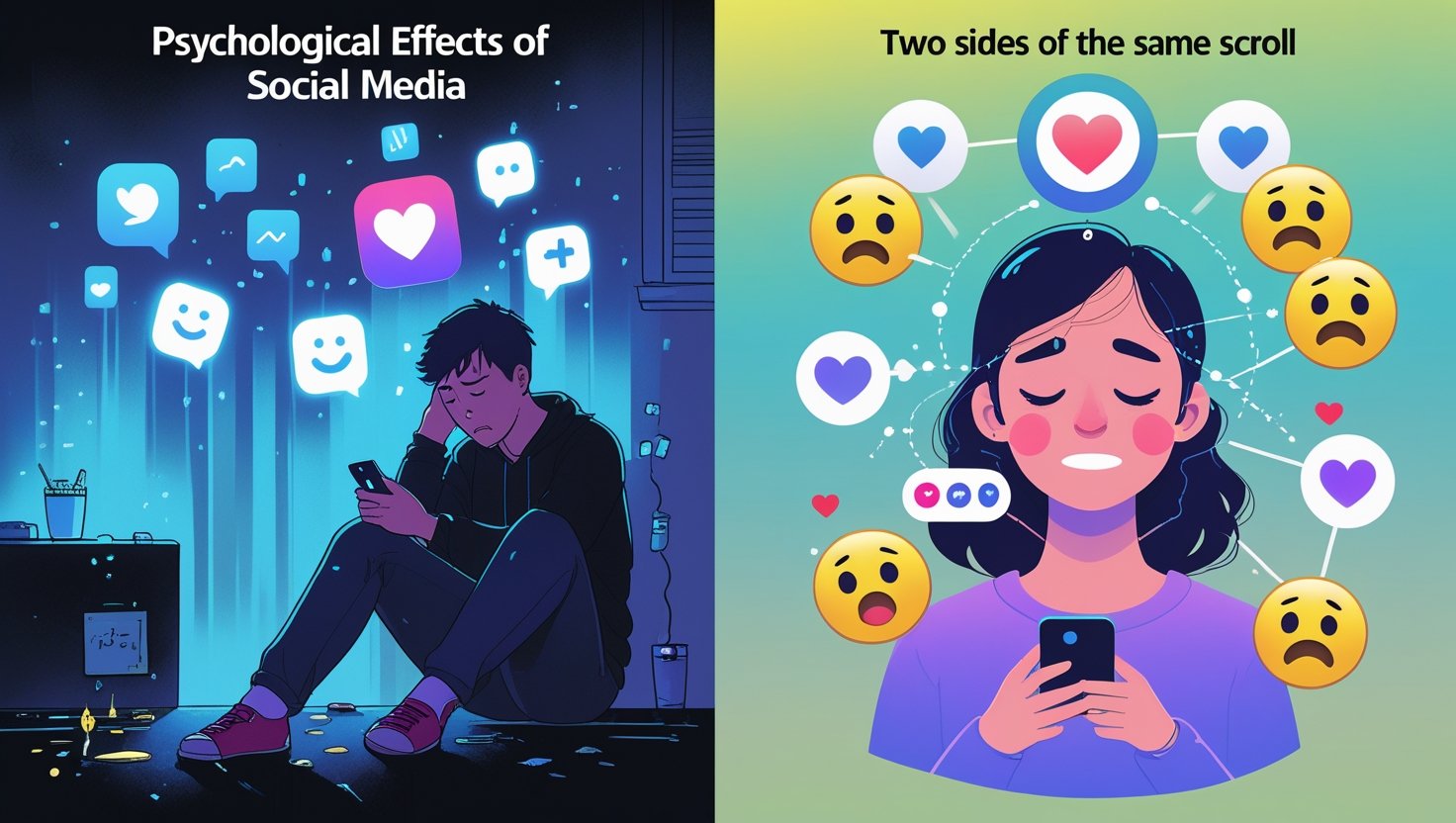
Social media has become an important part of everyone’s life in today’s digital era. Platforms like Facebook, Instagram, TikTok, Snapchat, and Twitter not only connect people with each other but also give access to information from around the world at all times and everywhere. Earlier, people used to sit together and talk, but now most conversations take place over screens. Everyone shares moments of their life, be it happiness, sorrow, or a new experience.
Social media has definitely made communication easy, but its psychological implications are becoming apparent day by day. People compare their real life with the unfiltered and glamorous images that they see in their news feeds. This comparison sometimes turns into hatred, jealousy, and depression. Staying online all the time and waiting for likes or comments creates mental pressure.
Often people feel that if they are not active on social media, they are getting cut off from society. This FOMO (Fear of Missing Out) affects their mental health. Hence, it is important to understand that the impact of social media is not only positive but can be negative. In this blog we will explore how social media is having an impact on our mental health.
Anxiety and Depression – The Dark Side of Online Interaction:
While on one hand, the use of social media connects people to the whole world, on the other hand, its excessive use is also becoming the cause of anxiety and depression. When people repeatedly compare their lives with the glamorous posts of others, they feel that something is missing in their lives. This negative comparison not only takes away their happiness but also makes them a victim of sadness and depression. Cyberbullying is also a very big issue that is spreading through social media. When someone is insulted online or is made fun of, that person breaks down emotionally.
Such online experiences lower their self-esteem and make them victims of anxiety. Another reason that makes people anxious is constant notifications and the pressure of staying online all the time. When someone feels that they are being ignored or their post is not going viral, they feel frustrated. In such a situation, they start measuring their worth only by likes and comments. Such thoughts have a bad impact on the mind of a person, and he slowly moves towards depression. Therefore, it is important that people control their social media usage wisely and should not hesitate to take professional help when needed.
Self-Esteem and Body Image Issues:
Every day on social media platforms, we see people who appear physically perfect, with flawless skin, a smart body, designer clothes, and a luxurious lifestyle. But in reality, behind these images, there are filters, editing, and staged photography. When common people see these perfect photos, they start complaining about their real life and their bodies. They start thinking that they are not good enough, their complexion, weight, or lifestyle is not perfect. This thought damages their self-esteem. Especially young girls and boys are more prone to this pressure. They measure their identity and self-worth only by how many likes they got or what people think about their face and style. It has often been seen that people hide their original personality and create a social media-friendly image just so that they can be accepted.
This double life mentally exhausts the person. When there is a difference between the real and digital image, he becomes a victim of emotional stress and identity crisis. All this slowly undermines mental health. The issue of self-esteem becomes not just personal but also social when people follow an unrealistic beauty standard. Therefore, social media must be understood as a part of reality, not the measure of the whole life.
Addiction and Dopamine Dependency:
Social media apps are designed in such a way that they keep the users engaged for a longer period. Whenever we get a notification or a post gets a like, dopamine is released in our brain, which gives a temporary feeling of happiness. This dopamine rush makes a person addicted, just like the effect of any addictive substance. People check their phones repeatedly just in the hope that a new notification will come. The effect of this continuous checking falls on their attention span and concentration. They are not able to focus on any work because their mind is always wandering towards the online world.
The biggest harm of addiction is that the person gets disconnected from their real life. He becomes distant from friends, family, and work only because he is addicted to social media. Dopamine dependency means that you feel happy only when you get some positive feedback online. When this does not happen, then sadness and frustration start increasing. These things deeply affect mental health, and the person becomes a victim of anxiety, stress, and burnout. To get out of this addiction, digital detox and mindful usage are necessary so that the human mind can come back into balance.
Isolation despite Connection – The Paradox of Digital Relationships:
The biggest irony of social media is that while it wants to connect us with the world, it is keeping us alone. People have thousands of followers, but when the need arises, they do not have a real person who can listen to them or support them. There is a huge difference between online friendship and real-life friendship. When people are busy on the phone all the time, they become distant from the people around them. Real conversations and face-to-face interactions are reduced. This digital connectivity is becoming the cause of emotional disconnect. Often, people post their sorrows on social media, but people close to them do not understand their real feelings. This isolation slowly turns into loneliness. A person feels that he is alone despite being online all the time.
There is no depth in digital relationships, there is only a surface-level relationship that fades with time. Because of this, emotional support and genuine bonding become very less. All this harms mental health. The human mind needs connection, but real, true and sensible connections. Therefore it is important that we take out time from social media and strengthen our real life relationships and invest both time and respect to avoid loneliness.
Conclusion:
In today’s digital age, being a part of social media has become a necessity, but its psychological consequences cannot be ignored. Issues like anxiety, depression, low self-esteem, addiction, and emotional isolation are the result of the overuse of social media. Every person should take responsibility for their mental health and understand that there is a right value to everything. Social media should be taken only as a tool, not made a source of your value or happiness. When we limit our screen time, value meaningful conversations, and involve ourselves more in our real lives, we feel better psychologically.
Being online all the time, craving for likes and comments, or comparing your life with others only causes emotional damage. That’s why it’s important to take an approach with mindfulness and balance. Taking a break from social media at times is also beneficial for mental health. The importance of real friendship, face-to-face conversations, and self-acceptance must be understood. Ultimately, be a part of the digital world, but don’t lose yourself in it. We should always put our real life, real relationships, and our mental well-being first. This is the only way we can live with a healthy mental state, even in this modern age of social media.
FAQs:
- How does social media use contribute to anxiety and depression?
Excessive social media use often leads people to compare their lives with others’ highlight reels, creating feelings of inadequacy and sadness. The pressure to get likes and stay constantly online also adds to anxiety. Negative experiences like cyberbullying further worsen mental health, making people feel emotionally low and sometimes even depressed. - Can social media affect a person’s self-esteem and body image?
Yes, social media often presents unrealistic beauty standards through heavily edited and filtered photos. When users compare themselves to these “perfect” images, they may feel insecure about their looks, lifestyle, or achievements. This constant comparison can lower self-esteem, especially among teens and young adults. - What is dopamine dependency in the context of social media?
Every time someone gets a like or a new notification, their brain releases dopamine, a feel-good chemical. Over time, this can become addictive. People may start relying on social media for happiness, checking it repeatedly and feeling low when they don’t get positive feedback. This dependency negatively affects focus and emotional balance. - Why do people feel lonely even when they are active on social media?
Although social media connects people virtually, it often lacks depth in relationships. Users might have many online friends but no real-life emotional support. This creates a sense of isolation, as digital interactions cannot replace meaningful, face-to-face relationships. - What are some ways to reduce the negative impact of social media on mental health?
To protect mental health, it’s important to practice mindful usage. This includes limiting screen time, taking digital detox breaks, focusing on real-life relationships, and avoiding comparison with others online. Seeking professional help when overwhelmed is also a healthy step toward emotional well-being.
